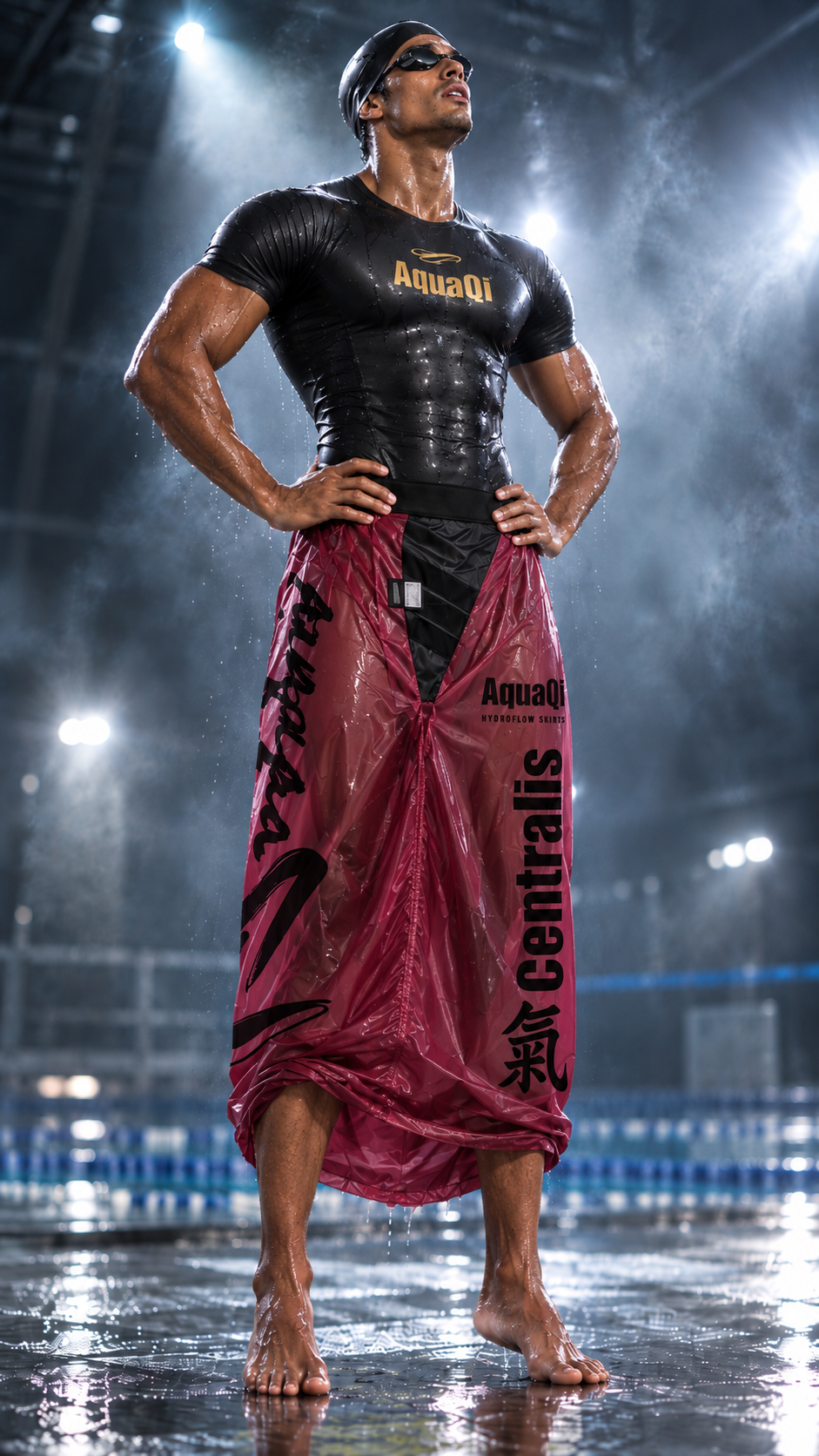
From Fins to Fabric: Rethinking the Monofin
For decades, the idea of a monofin has been closely connected to a rigid blade: two feet working together to drive one powerful surface through the water.
AquaQi begins with a different question. What happens when that connecting surface is not rigid at all — but soft, flexible, responsive, and shaped by the swimmer’s own movement?
The Traditional Monofin Idea
A conventional monofin joins both feet to a single blade. Instead of producing two independent kicks, the swimmer moves the legs together while the blade transfers that motion into the surrounding water.
This naturally encourages a more unified movement pattern, often associated with dolphin kick, freediving, underwater swimming, and mermaiding.
The blade provides structure. Its stiffness stores and releases energy while giving the swimmer a clear surface to push against the water.
That relationship between the body and the blade is part of what makes monofin swimming feel so different from swimming with two separate fins.
A monofin does more than increase surface area. It changes how the swimmer organizes movement by connecting both legs into one coordinated system.
Centralis has been exploring this idea through what we call the
Fabric Monofin
— keeping the connection between the legs while changing the material that creates that connection.
What Changes When the Blade Becomes Fabric?
AquaQi keeps the idea of connected movement but removes the rigid blade.
Instead, both legs move inside a lightweight HydroFlow Skirt made from thin sport fabric. The material surrounds the legs and extends beyond the feet, creating a flexible surface that moves continuously with the swimmer and the water.
The result is not simply a softer version of a conventional monofin.
It creates a different interaction altogether.
With a rigid fin, the swimmer moves the blade.
With fabric, the swimmer also feels the surface changing around the body.
The material stretches, folds, opens, narrows, and reacts to variations in speed, direction, alignment, and rhythm.
That responsiveness becomes part of the experience.
A Surface That Changes Shape
A rigid fin has a largely predetermined form.
Fabric does not.
Its shape is constantly being created by the interaction between the swimmer and the water.
When the hips drive a smooth body wave, the material follows the movement. When the legs bend, accelerate, or change direction, the surface changes with them.
This makes the HydroFlow Skirt feel less like a fixed mechanical extension of the body and more like a responsive layer around it.
The shape of the fin is no longer completely defined before the movement begins. The swimmer helps create it with every motion.
Propulsion Without a Hard Blade
Removing rigidity changes how propulsion feels.
A traditional monofin can transmit force directly through a stiff or semi-stiff blade. AquaQi approaches propulsion through fabric tension, water resistance, and the combined movement of both legs inside one surrounding surface.
The fabric can open against the water during parts of the movement and then change shape as the swimmer reverses direction.
That creates a softer and more fluid sensation than pushing against a solid blade.
AquaQi is not designed to imitate every characteristic of a rigid monofin. It explores another relationship with water — one based on responsive fabric, connected legs, movement awareness, and changing resistance.
For swimmers accustomed to conventional fins, that difference can be immediately noticeable.
Instead of relying primarily on the mechanical response of a blade, the swimmer is encouraged to pay attention to how the entire body creates and transfers movement.
The Body Becomes More Important
A flexible surface cannot completely dictate the way the swimmer moves.
Without a rigid blade determining much of the shape, rhythm and body position become more noticeable.
The hips, torso, knees, and feet all contribute to how the fabric behaves.
A smooth body wave may allow the material to flow cleanly through the water. A disconnected movement may create a different sensation through the fabric.
This is where AquaQi becomes especially interesting as a training tool.
The swimmer is not simply trying to generate propulsion. The swimmer is also learning to recognize the relationship between movement and response.
That same relationship is explored further in
AquaQi HydroFlow swim training,
where alignment, rhythm and core-driven movement become part of the practice.
AquaQi works through the interaction of all three. The body creates motion, the fabric responds to that motion, and the water shapes the resistance and feedback the swimmer feels.
A Different Kind of Feedback
One of the most distinctive qualities of fabric is that the swimmer can feel it changing.
As water pressure increases or decreases across the material, the sensation around the legs changes as well.
This can make subtle differences in movement easier to notice.
The swimmer may begin to recognize when the body is moving as one connected wave, when the hips are contributing effectively, or when movement becomes unnecessarily forceful.
The goal is not to force one perfect technique.
It is to create an environment where movement can be explored more consciously.
More Freedom Around the Feet
AquaQi also changes the practical relationship between the swimmer and the equipment.
Traditional monofins generally secure both feet into foot pockets attached to the blade.
The HydroFlow Skirt instead surrounds the legs and extends past the feet. The swimmer is inside the fabric rather than attached to a hard fin.
That creates a different sense of freedom and softness around the lower body.
It also supports one of AquaQi’s defining ideas: the fabric can be worn long during swimming and adjusted upward when the swimmer needs greater freedom around the feet outside the water.
The object behaves more like aquatic clothing than conventional fin equipment.
From Equipment to Movement Interface
Perhaps the biggest difference is conceptual.
A fin is normally thought of as an object that extends the swimmer’s physical power.
AquaQi also asks the swimmer to pay attention to information coming back from the water.
The fabric is continuously being shaped by the body and the surrounding flow. In that sense, it acts as an interface between the swimmer and the water.
Movement goes outward through the material, while pressure, resistance, and changing tension are felt back through it.
This broader idea — moving beyond a conventional rigid fin toward a wearable responsive surface — is also explored in
AquaQi: The Future of Monofins and Fluid Motion.
The idea is not simply to put a softer fin on the body.
It is to create a more responsive conversation between body, fabric, and water.
From rigid blades to flowing fabric, the monofin concept can be explored in more than one way. AquaQi takes that familiar idea of connected-leg swimming and opens it into something softer, more adaptive, and deeply connected to the swimmer’s own movement.