CENTRALIS JOURNAL / MOVEMENT
Why Flow Props Are Good for More Than Flow
A moving object gives the body something a conventional exercise
often does not: a path to follow.
Swing a rope, poi, ribbon or flexible movement prop in a circle
and the exercise immediately becomes more than moving an arm
from point A to point B.
There is timing. Direction. Momentum. Space. Visual feedback.
Rhythm. And once the movement continues, attention begins to
follow it too.
That is what makes flow props interesting even for people who
have no intention of becoming flow artists.
Movement With a Consequence
Many conventional exercises are intentionally predictable.
Lift. Lower. Push. Pull. Repeat.
A flow prop behaves differently. Once it is moving, momentum
has to be managed. Accelerate too suddenly and the path changes.
Lose timing and the movement becomes uneven. Reverse direction
and the body has to reorganize.
The object provides immediate physical and visual feedback.
We can see whether the movement remained continuous and feel
when the timing breaks.
CENTRALIS INSIGHT
The goal does not need to be a complicated trick.
A simple continuous circle can already become a practice
in timing, position, control and attention.
Rhythm Changes the Exercise
Repetition is part of almost every form of physical training.
Rhythm gives that repetition structure.
Instead of thinking only about individual repetitions, we can
begin to work with continuous movement:
Circle. Redirect. Cross. Reverse. Repeat.
The exercise becomes a sequence rather than a collection
of disconnected actions.
Dance and other coordinated movement practices work in a similar
way. Timing, spatial awareness, balance and attention are often
combined instead of being trained as completely separate qualities.
The Body Has to Negotiate With Momentum
A moving prop does not wait perfectly still while we decide
what to do next.
The hand may guide it, but the shoulder, torso, hips and feet
can all become part of the solution.
As the movement becomes wider, the body often begins to rotate,
shift weight, step and reposition itself around the path of the prop.
That is why even simple flow practice can become surprisingly physical.
The movement may begin in the arm, but it does not have to stay there.
Slow Flow Matters Too
Flow does not have to mean speed.
Working slowly can make small interruptions easier to notice.
Instead of chasing momentum, attention can move toward the path
of the prop, shoulder position, balance, breathing and the transition
from one movement into the next.
This is where flow begins to overlap naturally with mindful movement.
The moving object becomes something for attention to follow.
Stretching and Flow Don’t Have to Be Separate
Flexible movement props can bridge two very different parts
of a session.
A strap can extend reach during controlled mobility or stretching work.
From there, the same piece of equipment can shift into active,
rhythmic movement.
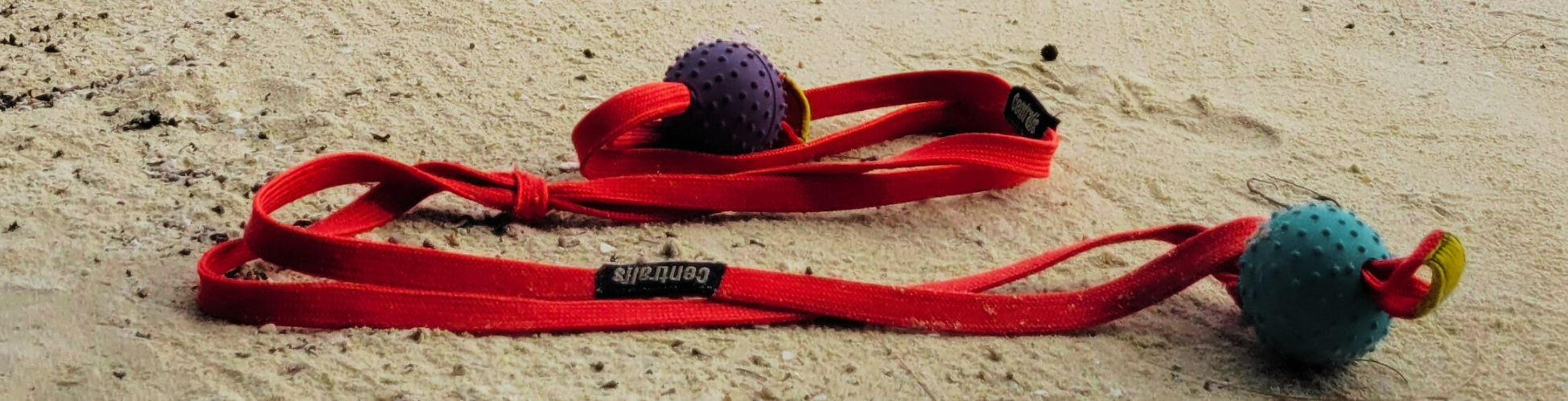
That transition is central to the idea behind
Centra Leash.
Rather than designing one object for one exercise, Centralis built
the system to move between strap-based mobility, meteor-style flow,
twin-poi practice and creative movement.
ONE TOOL / DIFFERENT STATES
Stretch It.
Swing It. Split It.
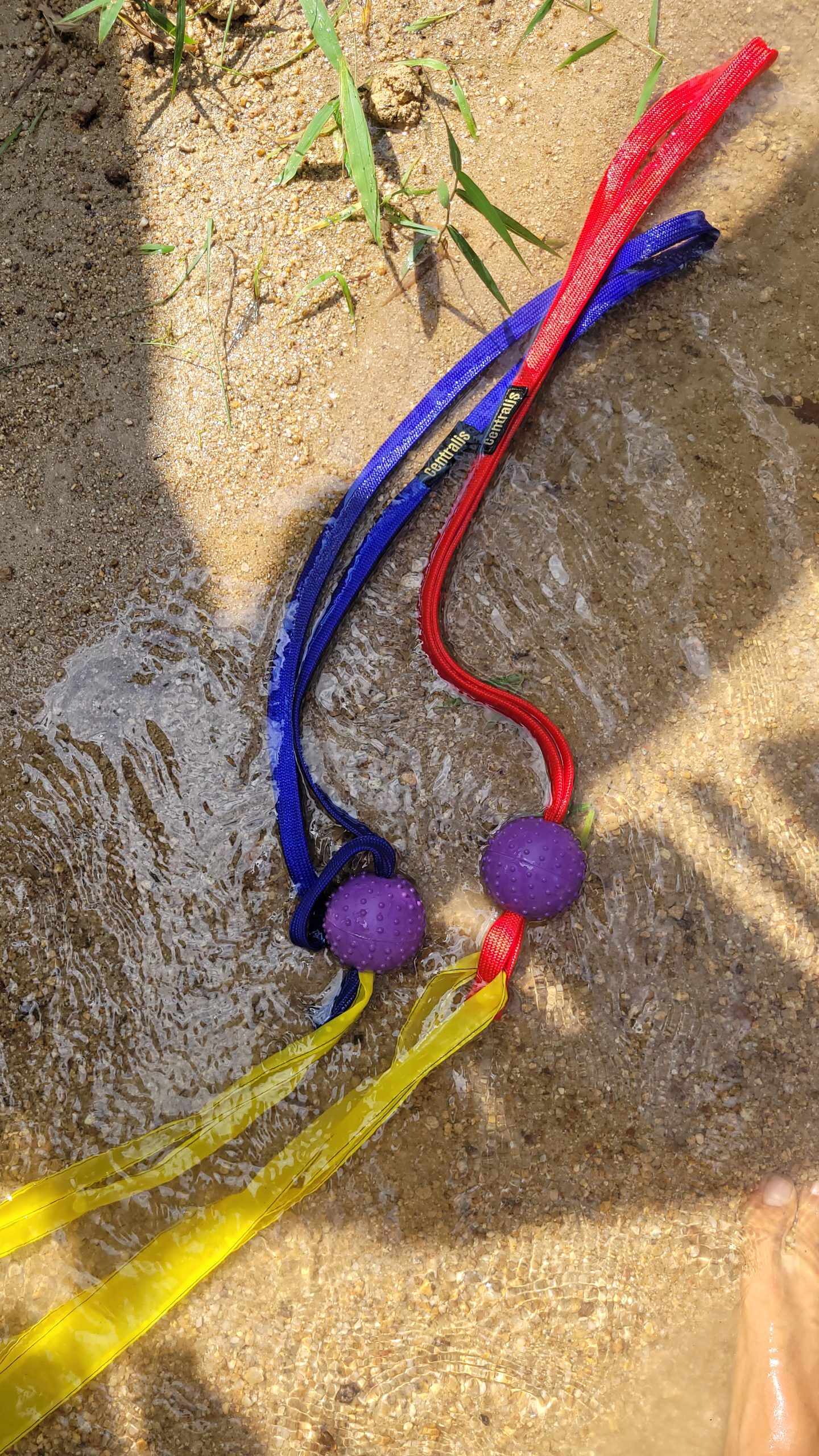
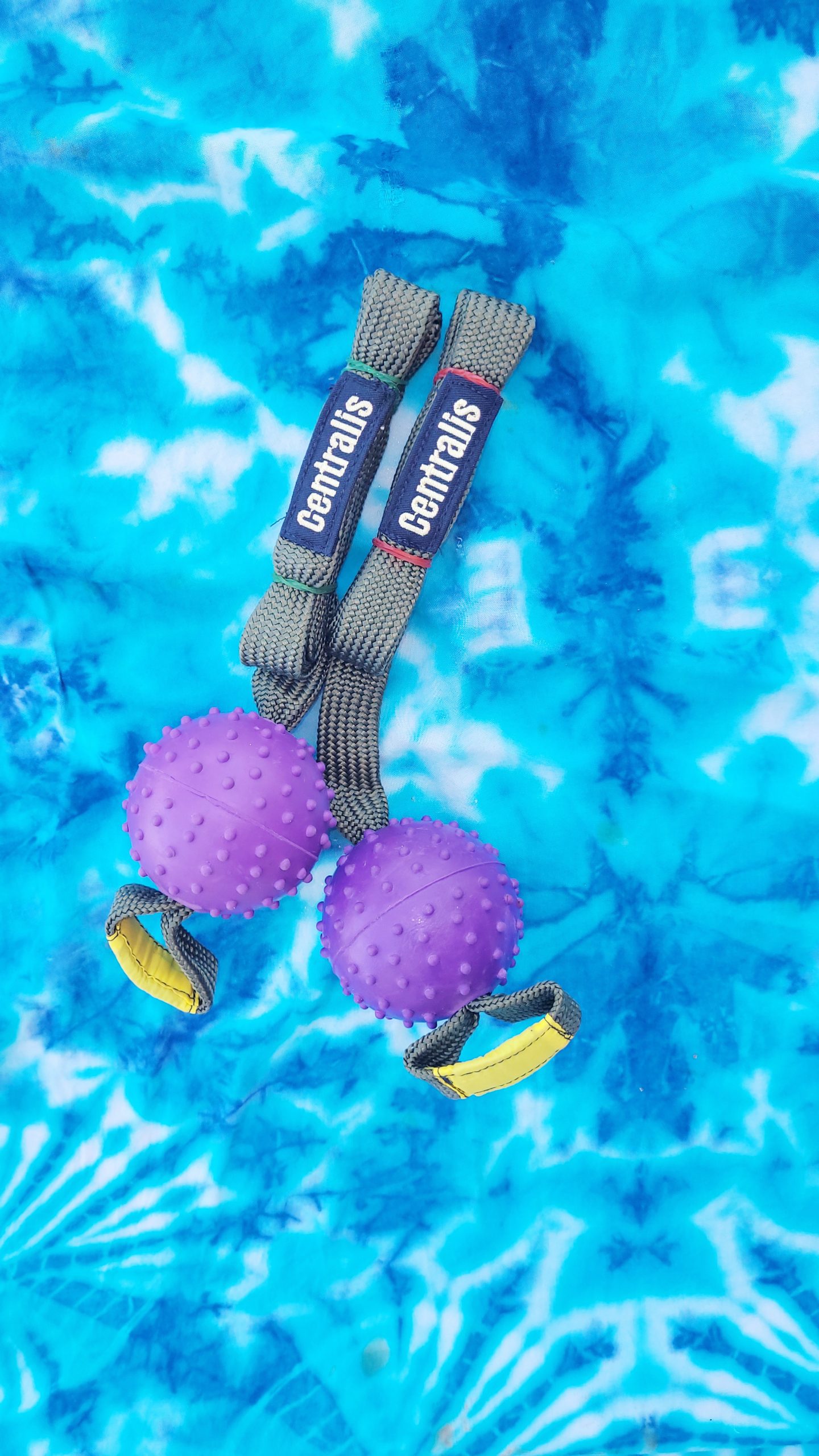
Centra Leash can work as a long movement strap,
a meteor-style flow prop or separate into twin poi.
The equipment stays compact while the movement possibilities change.
Add Another Feedback Channel
Visual feedback is obvious with a moving prop:
we can see the path.
With Centra Leash, an attached ribbon can introduce sound as well.
A continuous sweep produces a different audible pattern from
a sudden pulse, interruption or acceleration.
The ribbon therefore becomes more than decoration.
It creates another simple cue for continuity, timing and rhythm.
Not Every Training Session Needs to Look Like Training
One of the useful things about flow props is that they can make
physical practice playful.
Pass a moving object between two people.
Create a route around the body.
Add music.
Change hands.
Invent a rule.
Repeat the same pattern in the opposite direction.
The session can still involve mobility, timing, coordination
and physical work without feeling like another set of repetitions.
Sometimes that matters. A movement practice we enjoy exploring
is a practice we are more likely to return to.
Where Flow Fits Beside Athletic Training
Flow practice does not need to replace strength work,
sport-specific training, coaching or established mobility routines.
It can simply occupy a different space beside them.
For athletes, swimmers and freedivers, that might mean a short
movement session before training, a slower sequence afterward,
or a completely separate day where the focus is coordination
and rhythm rather than measurable performance.
For swimmers and freedivers in particular, that relationship
becomes interesting because movement does not have to stop
when the water session ends.
Movement Without One Correct Answer
Flow props are useful partly because they refuse to become
just one thing.
They can be physical.
Technical.
Playful.
Rhythmic.
Meditative.
Creative.
The value does not have to come from mastering a catalogue of tricks.
Sometimes it comes simply from giving the body a moving problem
and discovering another way to respond.
CENTRALIS / MOVEMENT BEYOND ONE EXERCISE
Explore Centra Leash.
Stretching, rhythm, coordination, flow and movement
in one flexible Centralis system.
RELATED CENTRALIS INSIGHTS