How AquaQi Trains Core-Driven Swimming

Some of the most connected movement in water begins long before the feet complete a kick.
Watch an experienced swimmer create a smooth body wave. The motion travels through the torso, hips and legs as one coordinated sequence.
It can look effortless, although the swimmer is constantly managing body position, timing and water resistance.
AquaQi HydroFlow introduces another way to experience that connection.
Instead of attaching a conventional rigid blade to the feet, AquaQi surrounds both legs with a long, lightweight fabric enclosure.
As the swimmer moves, the fabric changes shape and tension in response to the water.
This creates an opportunity to explore how a body wave feels as it travels from the center of the body toward the feet.
What Does Core-Driven Swimming Mean?
Core-driven swimming is not simply about having strong abdominal muscles.
It is about organizing the torso, hips and lower body into a coordinated movement.
During dolphin-style swimming, the movement passes through a sequence rather than happening everywhere at once.
The torso changes shape, the hips continue the wave, and the legs and feet complete the movement.
When the sequence is coordinated, the swimmer may experience a more continuous rhythm.
When it is fragmented, movement from the legs may feel separated from movement in the upper body.
AquaQi can make some of these differences more noticeable through the changing response of its fabric.
Learning to Feel the Body Wave
The body wave is often described using a simple instruction: move from the hips.
That instruction is useful, but actual movement involves more than one joint or muscle group.
The chest, torso, pelvis, knees and ankles work in sequence.
A swimmer may create a small, controlled wave or a larger, more pronounced motion.
The relationship between timing and movement size changes the sensation of swimming.
With AquaQi, the swimmer can experience how those changes influence the resistance of the fabric.
This physical feedback is not a measurement of technique quality. It is another sensation for the swimmer to observe and explore.
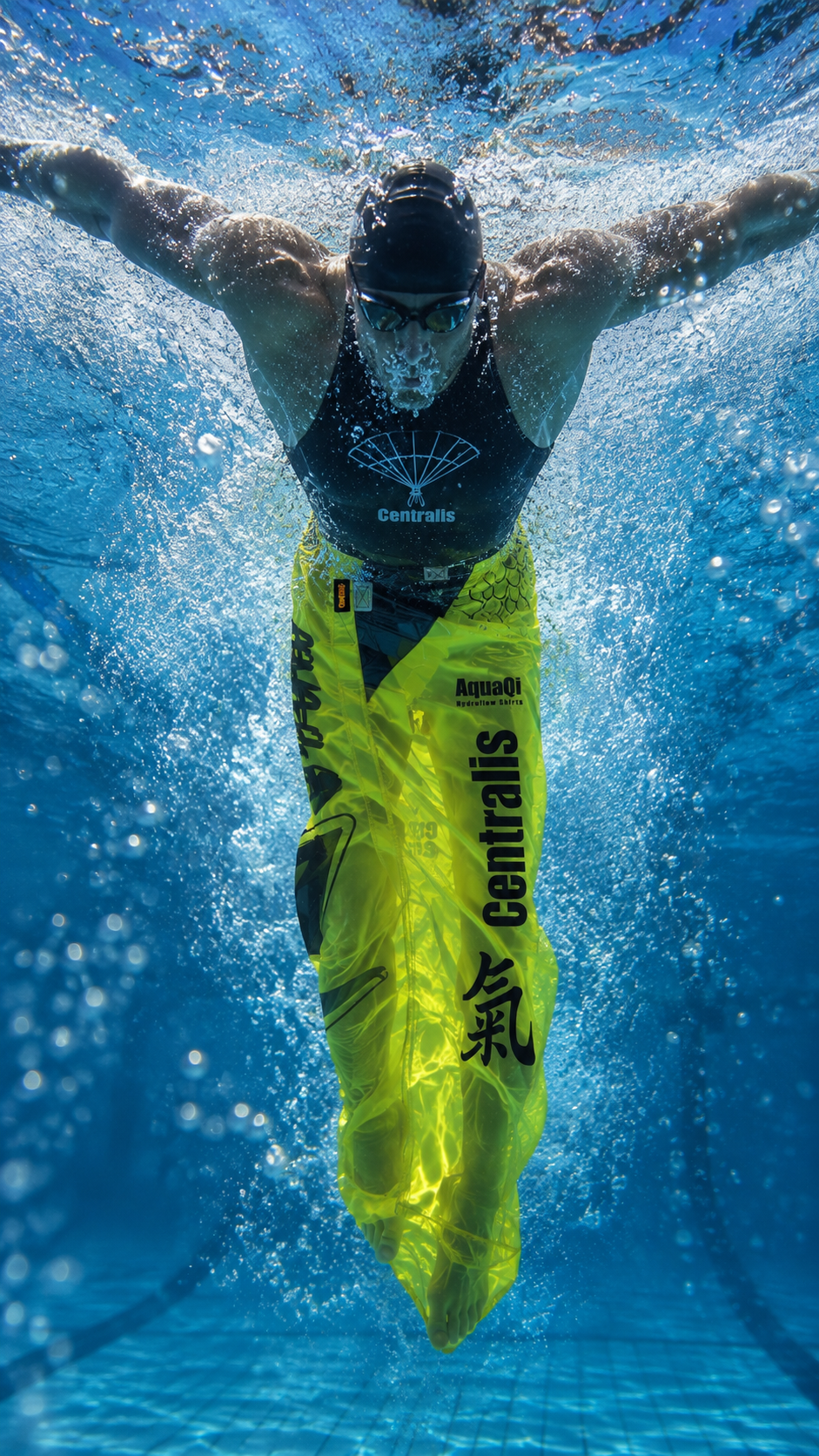
One Body.
One Continuous Wave.
Connected-leg movement does not mean the entire body becomes rigid.
The swimmer still changes shape through the torso, hips, knees and ankles.
AquaQi introduces a fabric surface around both legs, connecting their movement within one enclosure.
The changing fabric tension can become an additional sensation for exploring coordination and rhythm.
The Relationship Between Hips and Legs
It is easy to focus on the feet because their movement is clearly visible.
But during undulation, the legs do not act independently from the rest of the body.
The position and timing of the hips influence the movement that continues through the lower body.
When the knees dominate the movement, the swimmer may create a different rhythm and body shape.
When the torso, hips and legs coordinate, the wave may feel more continuous.
Because AquaQi surrounds both legs, a change in their movement may affect how the fabric opens, folds or changes tension.
Why Alignment Matters During the Wave
A body wave cannot remain perfectly straight throughout its cycle.
The swimmer naturally changes shape while producing movement.
Good alignment is therefore not a frozen position.
It is the relationship between body parts as the swimmer travels through water.
Excessive changes in direction, unnecessary twisting or disconnected motion can change the resistance experienced.
AquaQi's flexible enclosure may make some of those changes noticeable through differences in fabric tension and movement.
Movement Changes Shape.
A streamlined swimmer is not necessarily motionless or rigid.
As the wave moves through the body, the alignment changes from moment to moment.
What matters is whether the different phases of movement remain connected and purposeful.
The AquaQi fabric adds a visible and physical element to that relationship.

Training Movement, Not Just Strength
A more powerful movement is not automatically a better-coordinated movement.
Some swimmers naturally increase kick amplitude when they want to move faster.
But increasing amplitude changes body position and the forces involved.
A smaller movement with a steadier rhythm may feel different from an exaggerated or disconnected kick.
AquaQi allows the swimmer to explore this difference through the fabric's response to water.
The objective is awareness, not simply generating the greatest possible resistance.
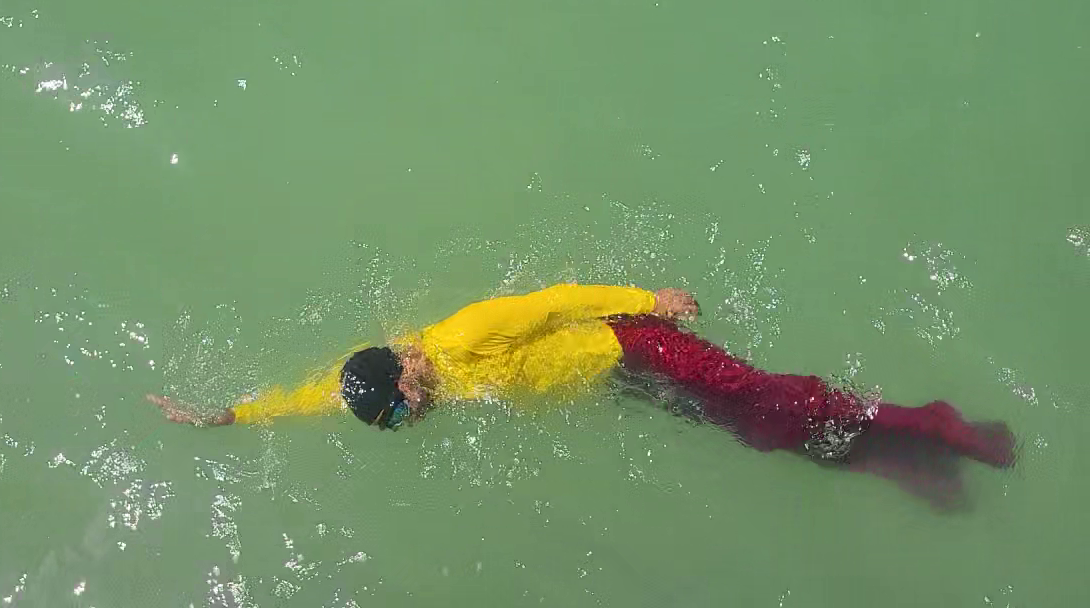
The Fabric Becomes Part of the Feedback
AquaQi's defining feature is its responsive fabric enclosure.
It begins around the hips and extends beyond the feet.
Both legs remain within the long, relatively narrow fabric skirt.
As the swimmer produces a body wave, water pressure influences the shape of the material.
The fabric may open during one phase of movement and narrow during another.
Those changes create different sensations of resistance.
Unlike an electronic training system, AquaQi does not interpret that feedback for the swimmer.
The swimmer learns by observing the sensation and comparing different movements.
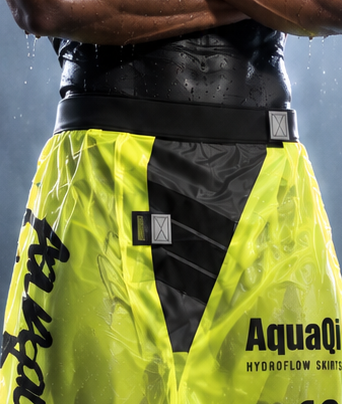
Feedback Through Fabric.
The skirt's waistband secures the fabric around the swimmer's lower torso and hips.
The fabric extends along both legs, continuing beyond the feet as one flexible enclosure.
The material is not a rigid fin blade. It responds to movement and water pressure by changing shape and tension.
From Conscious Practice to Familiar Movement
Learning a movement often begins with deliberate attention.
A swimmer may focus on the position of the hips, the size of the body wave, or the moment each part of the body follows the previous one.
With repeated practice, some of these relationships can become more familiar.
AquaQi adds a different sensory experience during that process.
The goal is not to assume that wearing the equipment automatically creates better technique.
Instead, the swimmer can use the changing resistance as one additional reference while developing movement awareness.
Explore the Rhythm. Recognize the Movement.
Coaching provides guidance. Practice creates familiarity. Physical feedback adds another sensation to investigate.
AquaQi's role is to provide a responsive fabric surface through which swimmers can explore movement.
Let the Water Become Part of the Lesson
Swimming instruction often involves a combination of demonstrations, verbal guidance, video analysis and repetition.
AquaQi introduces another dimension: the physical feeling of moving with responsive material.
When body position or kick rhythm changes, the fabric may create a different sensation.
That sensation can become a useful question during training.
What changed in the movement?
Was the rhythm more connected? Did the hip movement feel different? Did the body line remain organized?
These questions are best explored alongside appropriate swimming instruction rather than treated as automatic judgments from the equipment.
Find the Connection.
Follow the Flow.
A coordinated body wave connects the torso, hips and legs.
AquaQi extends that movement into a responsive fabric surface that changes with the water.
A different way to explore the rhythm of swimming.
Core-Driven Swimming Is a Relationship
The swimmer, the equipment and the water are never completely separate.
A movement beginning through the torso continues toward the hips, legs and feet.
AquaQi adds fabric to that relationship.
As the fabric responds to water, the swimmer can experience changing resistance during the body wave.
The purpose is not to promise faster swimming or effortless technique improvement.
It is to introduce a different way to explore movement awareness and coordinated swimming.
Begin with the core. Connect the movement. Let the water become part of the experience.
AquaQi should be used in suitable aquatic conditions with appropriate supervision. It is not a flotation or safety device.
Experience Body-Driven Flow.
Discover AquaQi's long fabric-monofin design and explore a different relationship between your core, body-wave movement and the water.