How AquaQi Trains Core-Driven Swimming
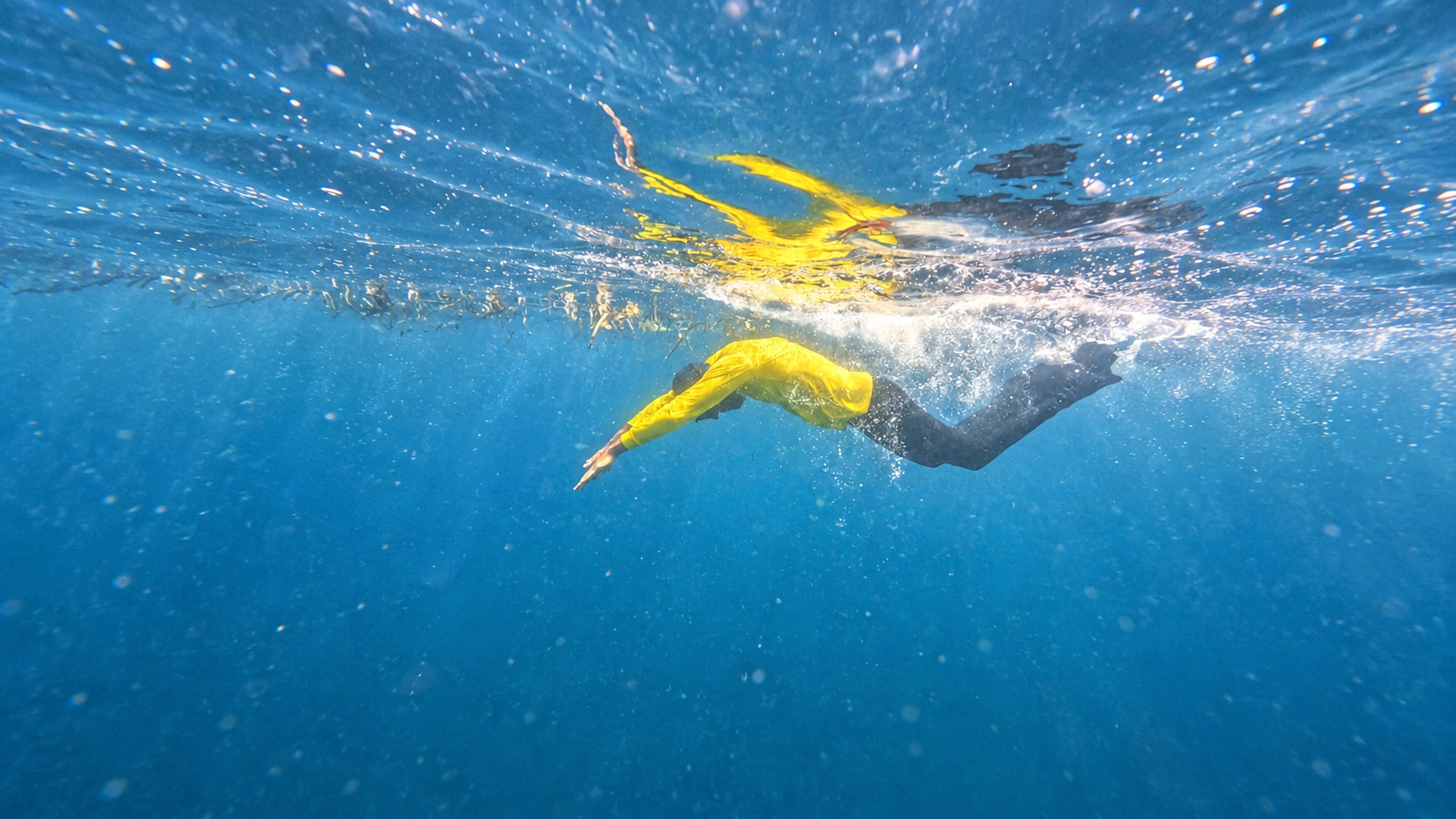
Powerful swimming does not always begin with a powerful kick. In many underwater movements, it begins with the way the entire body works together.
A coordinated wave travels through the torso, hips and legs, creating movement that feels connected rather than fragmented.
In dolphin-style swimming, the feet are the final part of a much larger movement sequence.
AquaQi HydroFlow introduces an unusual way to explore that connection.
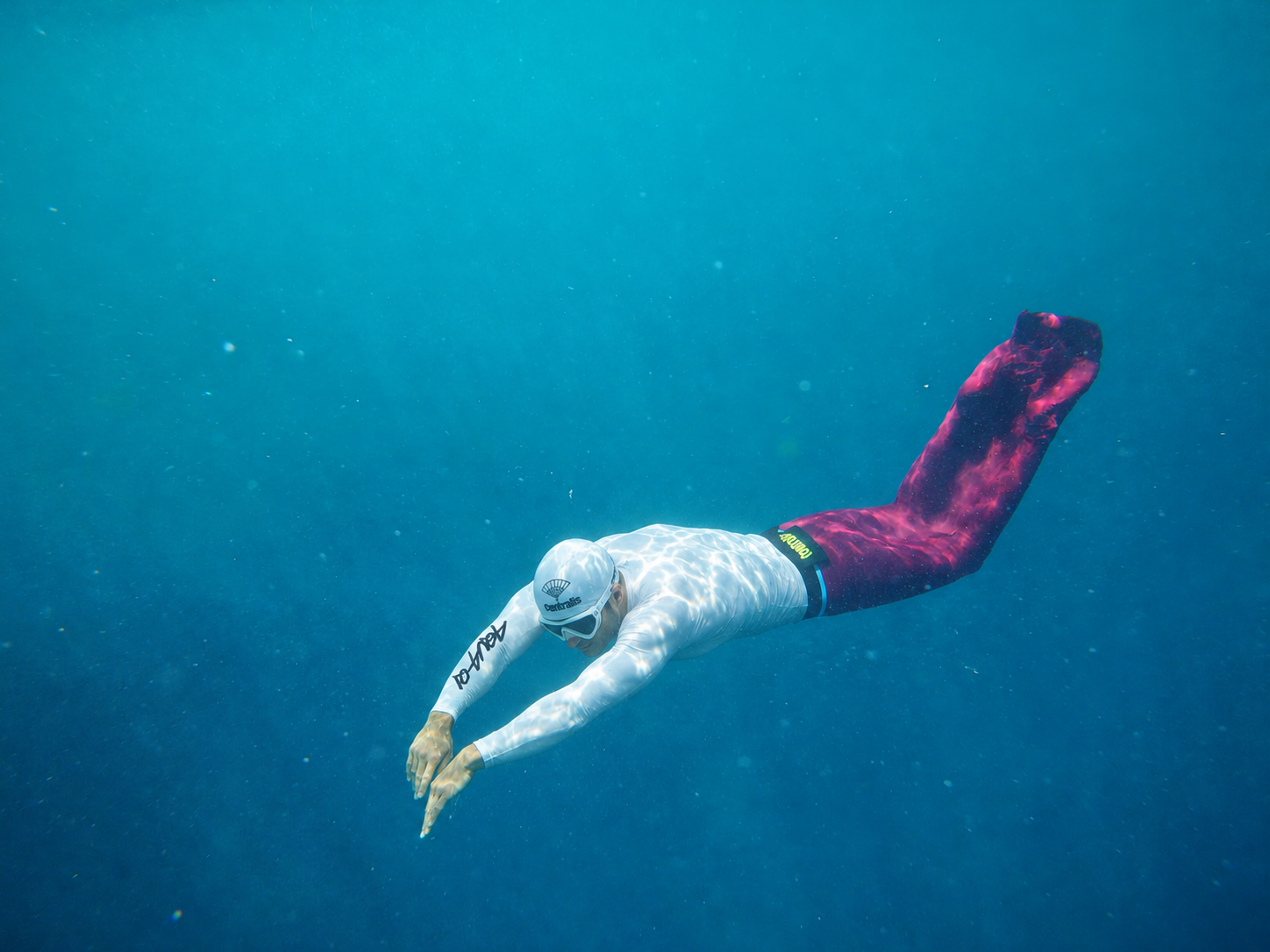
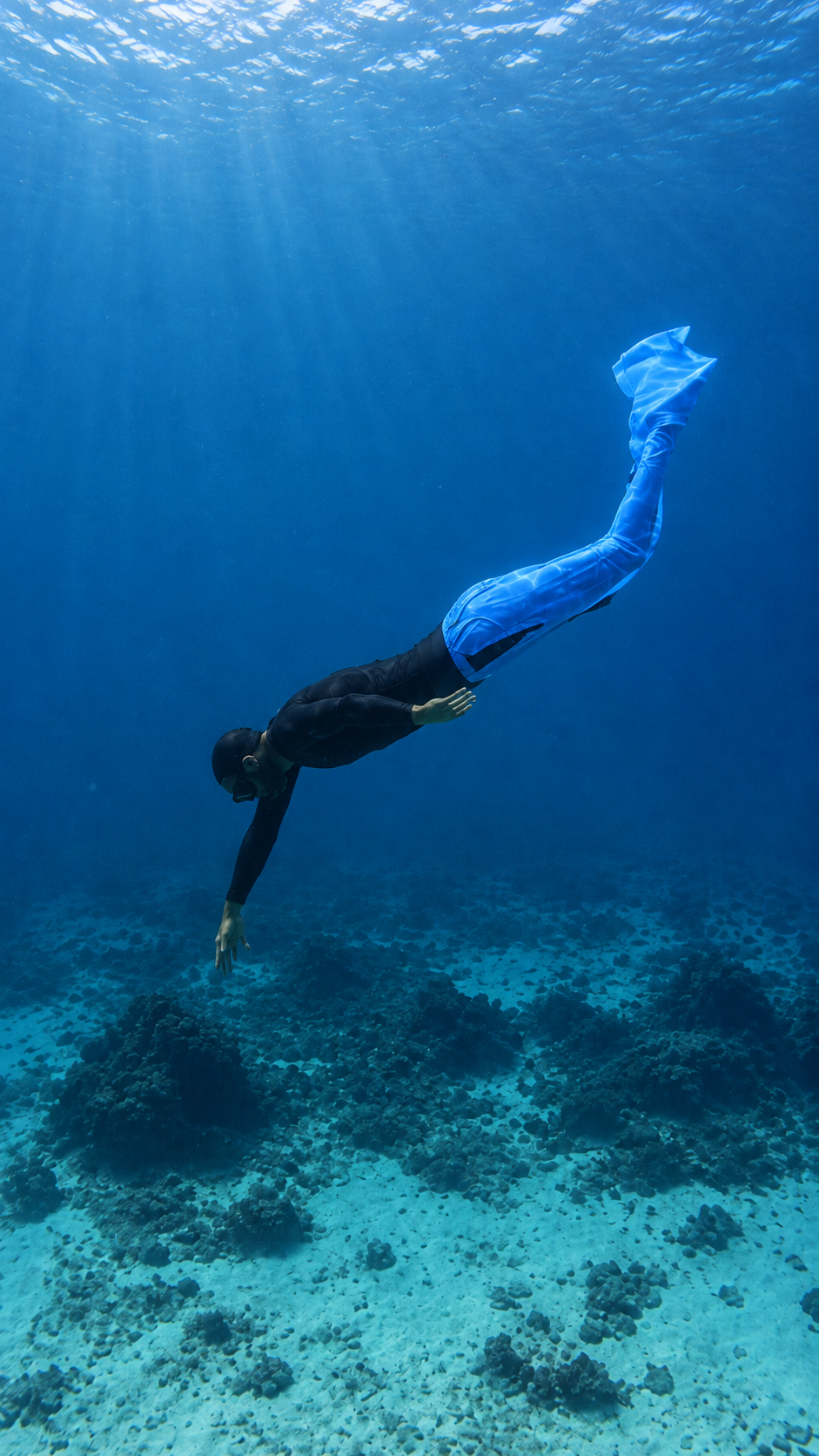
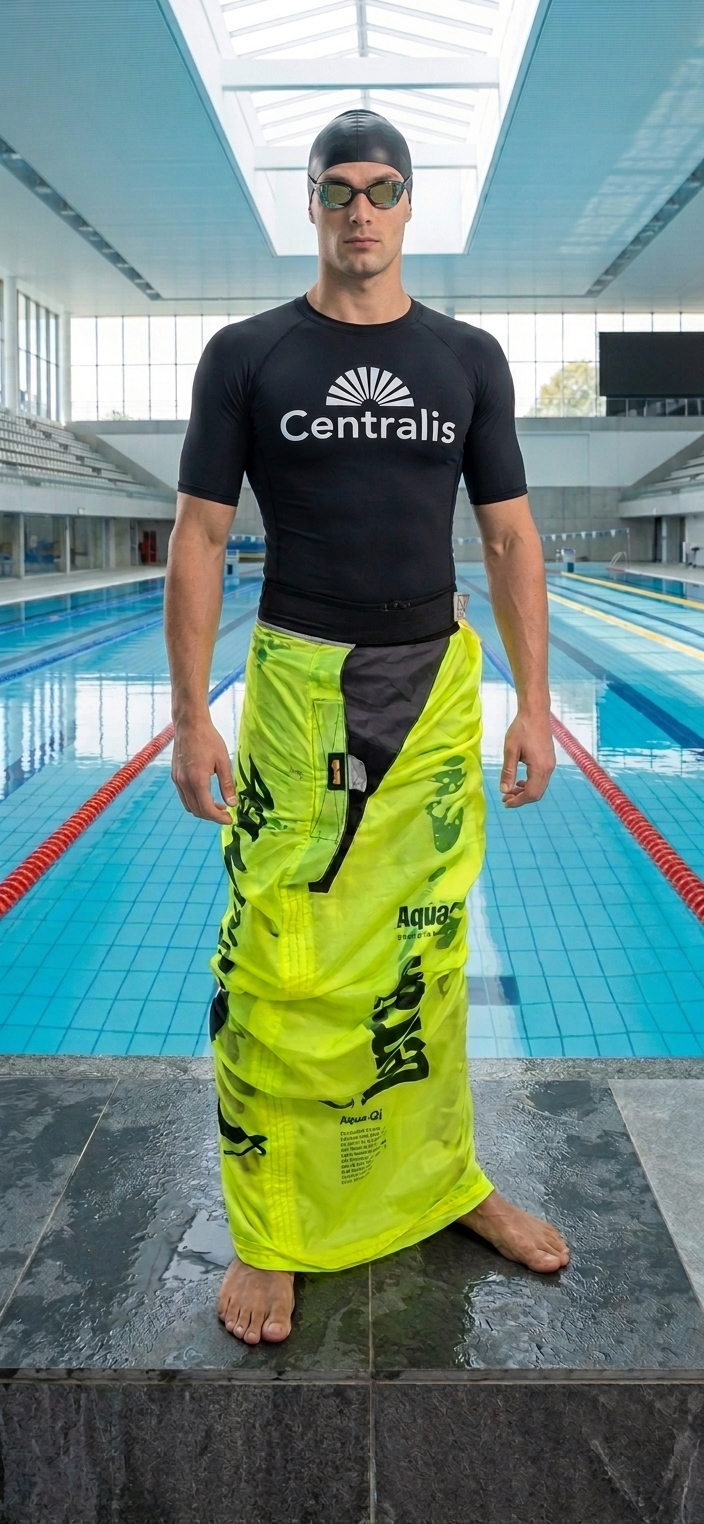
Instead of attaching a rigid propulsion blade to the feet, the swimmer wears a long, lightweight fabric skirt that surrounds both legs and extends beyond the toes.
As the body moves, the fabric responds.
That changing relationship can provide another sensation for understanding movement from the center of the body.
Movement Begins at the Core
The expression “core-driven” does not mean that only the abdominal muscles generate movement.
It describes a coordinated action involving the torso, hips and lower body.
During a dolphin-style body wave, different parts of the body move in sequence.
The movement travels through the trunk and hips, continuing toward the knees, ankles and feet.
When the timing is connected, the legs contribute to one continuous movement pattern.
When the timing is interrupted, the swimmer may experience a series of separate movements instead of a coordinated wave.
AquaQi introduces a continuous fabric surface around both legs, allowing the swimmer to explore the sensations created by these differences.
Understanding the Body Wave
A good body wave does not require every part of the body to move at exactly the same time.
Instead, the movement follows a coordinated sequence.
The torso changes position, the hips continue the movement, and the legs follow.
This produces a continuous pattern rather than a single isolated kick.
The size of the wave may change depending on the swimmer's technique and purpose.
A controlled, relatively small movement can feel very different from an exaggerated wave.
The important element is not simply amplitude. It is the relationship between timing, coordination and direction.

The Hips Connect the Wave.
Watch the relationship between the torso, hips and legs as the swimmer changes body shape.
The wave does not have to remain perfectly straight.
It moves through a series of connected curves while the swimmer continues traveling in water.
AquaQi responds to these changes, introducing another physical sensation during the movement.
Coordination is the connection between one phase of movement and the next.
Connecting the Hips and Legs
Many swimmers become highly focused on what their legs are doing.
But the legs are only one part of the movement.
In core-driven swimming, the timing of the hips influences how the movement continues toward the feet.
A disconnected kick may feel powerful without creating the intended rhythm.
A coordinated body wave can create a different sensation, where the movement flows from one area of the body into another.
AquaQi surrounds both legs with one fabric enclosure, so the swimmer experiences water resistance across the material as the legs move.
The fabric's response changes with the movement rather than remaining a fixed surface throughout every kick.
The Fabric Becomes Part of the Feedback
AquaQi does not have sensors, screens or an automatic technique-correction system.
Its feedback comes from the physical relationship between fabric and water.
As the swimmer moves, the fabric can open, narrow, fold and change its tension.
Different leg positions and movement patterns may produce different sensations of resistance.
The swimmer can pay attention to those sensations while exploring body-wave timing.
This does not mean that every change in fabric tension identifies a correct or incorrect movement.
It means the fabric offers an additional physical reference during practice.
Alignment Changes the Experience
Body alignment influences how water moves around the swimmer.
During a body wave, the swimmer's shape changes continuously.
The objective is not to hold a rigidly straight position throughout the kick.
Instead, the swimmer aims to keep the movement connected and directed.
A large, uncontrolled movement can create unnecessary changes in body position.
A smaller, well-timed movement may create a different sensation of flow.
With AquaQi, the surrounding fabric can make some changes in movement and resistance more noticeable.
Move From the Center. Feel the Whole Wave.
The torso begins a coordinated movement. The hips continue it. The legs follow, while the fabric responds to the surrounding water.
This creates another way to explore timing, rhythm and body awareness.
Movement, Not Just Strength
Training with AquaQi is not simply about making swimming harder.
Although the fabric introduces resistance, that resistance is responsive to the swimmer's movement.
Two different body-wave patterns may produce noticeably different sensations in the same equipment.
A forceful but poorly coordinated movement may not feel as controlled as a smaller wave with better timing.
This encourages exploration rather than assuming that greater force always creates a better result.
Less Force.
More Flow.
A swimmer does not need to move with maximum force on every kick.
Sometimes the most useful discovery is how a controlled wave travels from the torso toward the feet.
AquaQi provides a responsive fabric surface for exploring that relationship.
From Practice to Natural Movement
Swimming technique often develops through repeated experiences of movement.
At first, a swimmer may need to think consciously about hip position, timing and the size of the wave.
With practice, some of those relationships can become more familiar.
AquaQi may be used as one way to explore these sensations during supervised training.
The goal is to become more aware of how coordinated movement feels.
Whether that awareness improves swimming technique outside the skirt depends on the individual, the quality of instruction and the training approach.
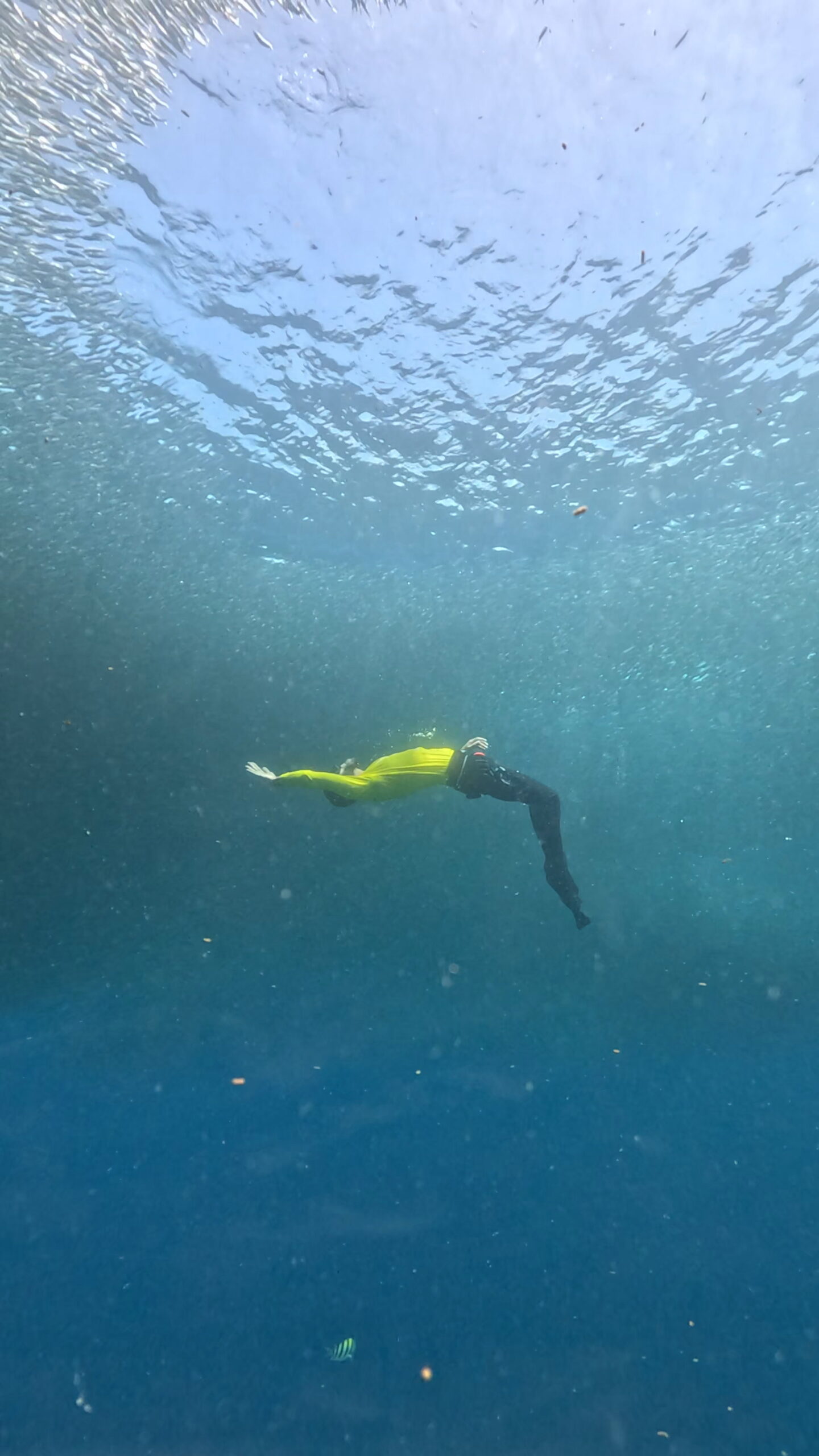
Every Body Wave Feels Different.
Water conditions, body position, rhythm and movement intensity all influence what the swimmer experiences.
The challenge is to learn which sensations relate to a coordinated movement rather than simply pushing against resistance.
The fabric provides another point of comparison during practice.
Learning Through Sensation
Traditional swimming coaching often uses verbal instructions, demonstrations and video feedback.
A coach may ask a swimmer to organize the hips, reduce unnecessary knee movement or maintain a longer body line.
AquaQi can add another physical sensation alongside those established teaching methods.
The fabric changes its response as the swimmer changes their movement.
That sensation may help the swimmer pay attention to the timing and coordination of the body wave.
A Training Experience That Starts With the Body
AquaQi is not a substitute for swimming instruction or a promise of automatic technique improvement.
It is a fabric-based movement experience that invites swimmers to explore the relationship between body position, coordinated motion and water resistance.
The fabric is thin and flexible. Its long, relatively narrow enclosure surrounds both legs and extends beyond the feet.
When the body wave changes, the fabric can change shape and tension.
That is what makes it different from conventional rigid monofins and ordinary swim fins.
A Different Way to Experience Swimming.
The HydroFlow Skirt connects both legs inside one fabric enclosure while leaving the upper body free to move.
The swimmer can explore connected body-wave movement, with the fabric responding to the surrounding water.
Power starts at the core. Movement becomes the experience.
Core-Driven Swimming Is About Connection
A connected body wave involves more than pushing harder with the legs.
It asks the swimmer to coordinate the torso, hips and lower body as one movement system.
AquaQi introduces a responsive fabric surface that can make those movements feel different in water.
The experience is not about one perfect movement or guaranteed performance gains.
It is about exploring rhythm, coordination and the way the body interacts with water.
Begin with the core. Connect the wave. Explore the flow.
Practice should take place in appropriate conditions and under suitable supervision. AquaQi is not a flotation or safety device.
Experience the Connection.
Discover AquaQi HydroFlow and explore a different approach to body-wave swimming, responsive fabric and movement awareness.