How AquaQi Works
A fin that begins closer to your center.
AquaQi turns a whole-body wave into interaction with a soft fabric surface that begins near the hips, continues between the legs and extends beyond the feet.
Instead of waiting for propulsion to reach a rigid blade at the feet, HydroFlow allows movement from the upper body, core, hips and legs to progressively engage the fabric as the wave travels through the swimmer.
The HydroFlow Principle
Move the body. Tension the fabric. Redirect the water.
AquaQi works through the relationship between body, fabric and water. The swimmer creates the wave. The fabric turns that movement into a larger responsive surface. Water resistance gives that surface something to work against.
Whole-Body Propulsion
The wave can begin before the legs move.
With conventional fins, the obvious propulsion surface sits at the feet. AquaQi places usable fabric much higher on the body, so movement can begin interacting with resistance earlier in the wave.
The motion can begin through the extended hands, head, shoulders and chest, continue through the spine and core, transfer into the hips and legs, and then keep traveling through the fabric.
Instead of thinking only about kicking backward with the legs, the swimmer can explore a continuous downward-and-upward wave through the entire body — closer to the flowing motion used in dolphin kick and monofin swimming.
Hands → Head → Chest → Core → Hips → Legs → Fabric
The Swing Effect
Down becomes up. Up becomes forward.
When the upper body moves downward, the rest of the body follows the wave. The hips and legs respond in the opposite phase, creating a swinging motion through the swimmer.
As that motion tensions the AquaQi fabric, the water resists the larger surface. Forward movement becomes one natural route for that force to resolve.
The smoother the sequence, the more continuously the swimmer can transfer movement from the center of the body into the fabric and surrounding water.
The Underwater Sail
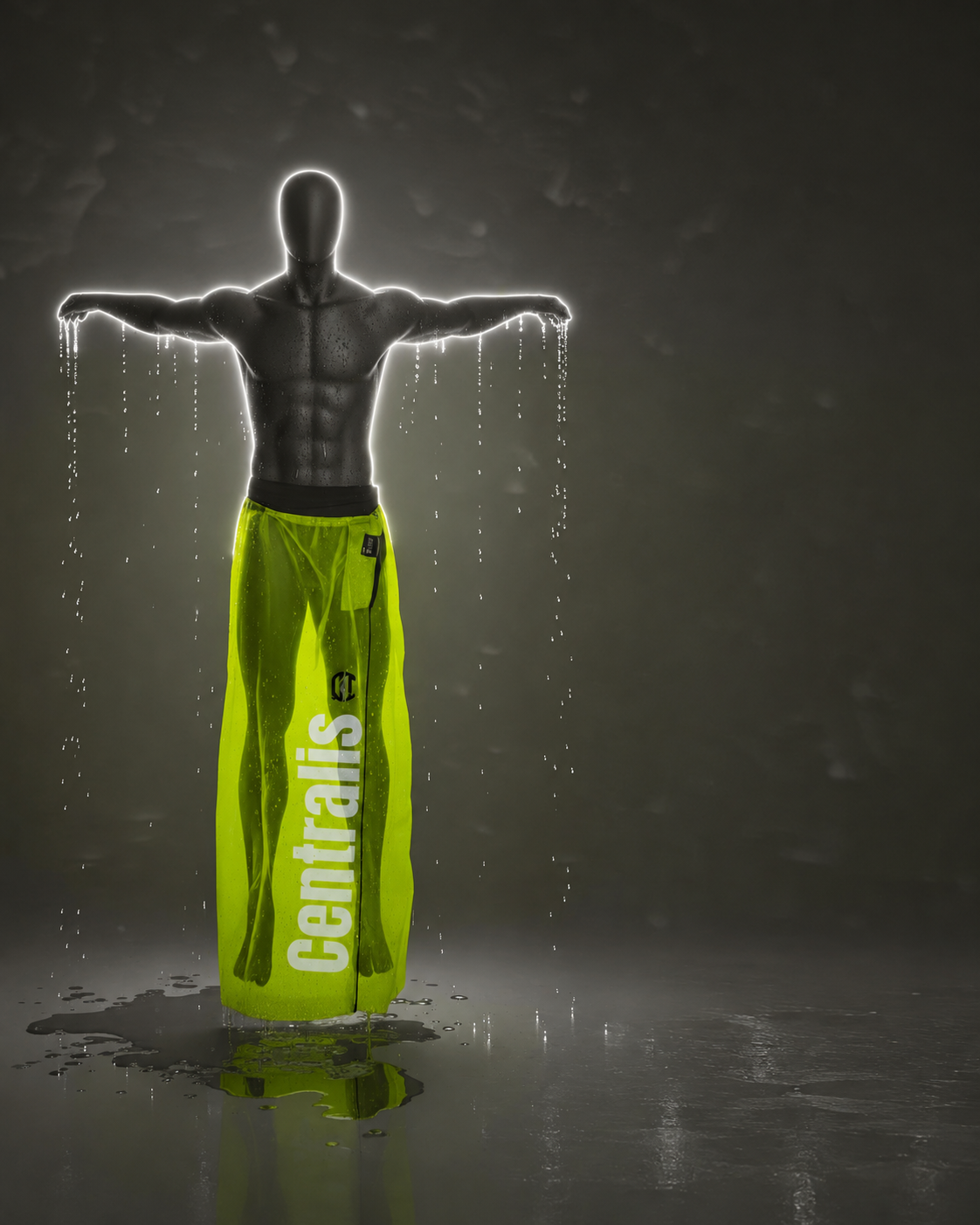
A larger working surface, closer to the core.
AquaQi creates a continuous fabric surface between and around the legs. That surface begins much closer to the hips than a conventional fin blade.
It can interact with the water around the thighs, above and below the knees, around the lower legs and feet, and through the fabric extending beyond the toes.
As the legs spread, more fabric can open between them and the surface becomes more tensioned — similar to tightening a sail. Bringing the legs closer reduces that tension and creates a softer, more relaxed response.
This gives the swimmer another variable to explore: not only how hard to move, but how much fabric surface to open and how tightly to load it against the water.
Adjustable Dynamics
Tight, soft, open or relaxed — the setup changes the feel.
AquaQi sizing intentionally overlaps, and the adjustable belt allows the same swimmer to experiment with different levels of tension.
A more tensioned setup can feel faster and more immediately responsive. A softer setup can allow a gentler, more flowing interaction with the fabric.
Swimmers who comfortably fit more than one AquaQi size may therefore experience slightly different HydroFlow characteristics from each fit.
The HydroFlow Signature
The skirt does not simply stop at the toes.
AquaQi is intentionally longer than the swimmer’s legs. The additional fabric extends past the feet and closes around the trailing end of the system as water moves behind the swimmer.
That extra length is designed to create a tighter trailing seal rather than leaving a wide open skirt edge for water to push back into.
The aim is a cleaner HydroFlow signature: water moving along and away from the skirt rather than being encouraged to enter through the lower opening and disturb the flow.
The fabric beyond the toes also remains free to move with the stream behind the swimmer, completing the soft fin surface without adding a rigid blade.
Responsive Fabric
The shape changes because the swimmer changes it.
Opens
Leg separation and water pressure can create a larger working surface.
Tensions
A wider spread can tighten the fabric and create a firmer response against the water.
Relaxes
Bringing the legs closer allows the fabric to soften and move with a gentler flow.
Feeds Back
Changes in pressure and fabric tension can make differences in movement easier to feel.
Movement Through the Spine
The body becomes part of the fin.
AquaQi encourages the swimmer to explore a longer wave rather than isolating propulsion to the knees and feet.
The upper body can lengthen forward while the spine, core and hips coordinate the wave underneath it. The movement then continues through the legs and into the fabric.
This creates a training environment for whole-body extension, coordination and fluid spinal movement rather than simply stronger kicking.
Vertical HydroFlow
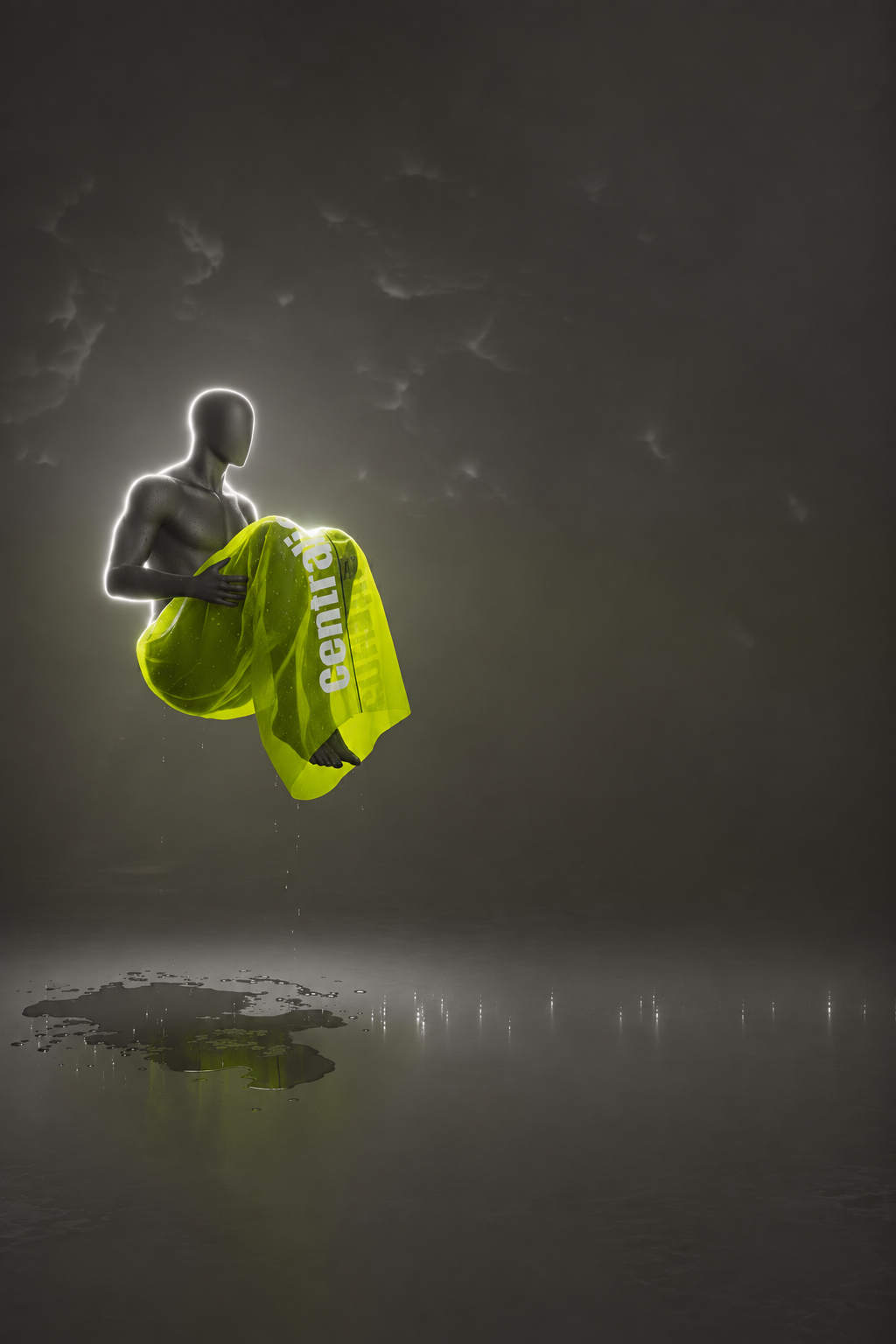
Practice the wave without traveling across the pool.
HydroFlow can also be practiced vertically. The swimmer can stay upright, work through the wave and feel how the fabric loads and releases against the water.
Holding a float can make this type of practice accessible while keeping the head above water and reducing the need to focus on breath-holding or forward travel.
Because AquaQi is soft and does not project below the feet like a long rigid fin, this kind of vertical movement can also be explored in many ordinary pool environments where depth is limited.
Surface to Depth
The fin surface can begin working before the feet are deep.
During a head-first surface dive, conventional fins become most useful once the feet and blades are submerged enough to work against the water.
AquaQi places usable fabric much higher on the body. As the diver folds and begins the downward movement, the upper part of the skirt can already interact with the water around the hips and thighs.
That allows the HydroFlow surface to enter the movement progressively rather than waiting for propulsion to reach only the feet.
Adjustable by Design
Fit can change before — or during — the session.
The wide adjustable waist belt is designed to accommodate overlapping body sizes while also allowing the swimmer to decide how firmly or loosely the system sits.
The lower seat / opening area can also be adjusted, helping the swimmer refine the way the skirt sits around the hips and upper legs.
These adjustments are not limited to initial fitting. The swimmer can change the setup between drills or during a session to explore a different feel.
Quick-Release Access
One pull when you want out.
The adjustable belt and diagonal opening are designed not only for fit, but also for fast access when the swimmer wants to disengage from the skirt.
Reflective pull tabs make the main release points easier to identify by touch or sight.
In an unusual situation — for example discomfort or the fabric becoming caught — opening the belt and lower adjustment provides a direct way to separate from AquaQi without treating the garment like a fixed fin system.
Small Details. Practical Water Use.
Designed for the moments around the swim, too.
Positive Buoyancy
A built-in buoyant element helps AquaQi remain positively buoyant, making an accidentally released skirt less likely to disappear below the swimmer in open water.
Reflective Details
Reflective pull tabs add visual reference points for locating the adjustment areas and can also help the skirt stand out when searching for equipment in low light.
Inside Indicator
A bright internal marker helps identify the inside and opening orientation — particularly useful when putting AquaQi on in the water, without a mask, or when visibility is limited.
Pool-Friendly Materials
Lightweight sport fabric keeps the system soft against the body while remaining capable of handling the repeated loading created by aquatic movement.
More Than a Long Skirt
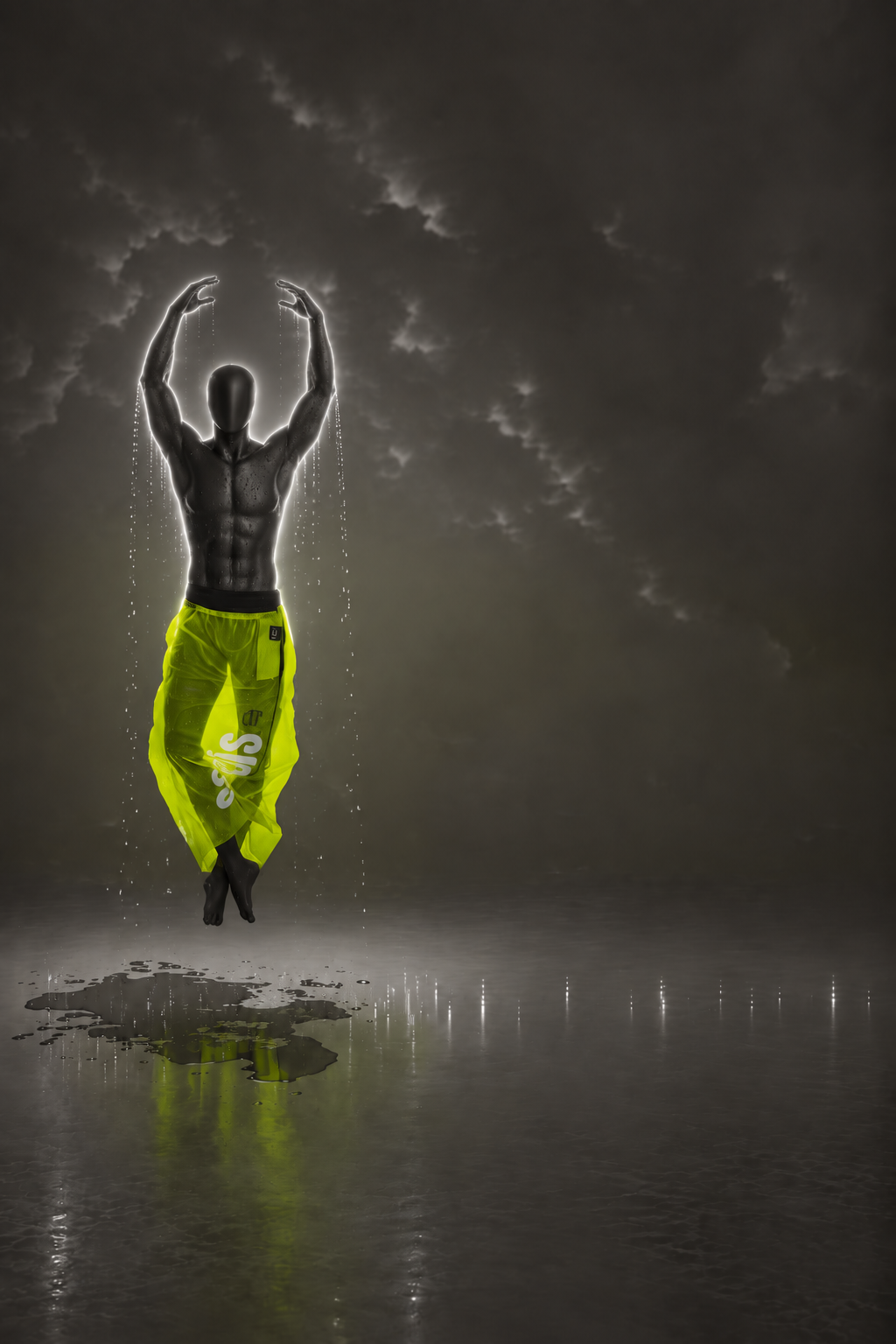
The geometry is what makes HydroFlow work.
Simply swimming in a normal long skirt would not create the same system.
AquaQi is shaped and fitted so the fabric can become a working surface between the legs while remaining controlled around the waist, hips and trailing end.
The adjustable upper fit, controlled fabric width, extended length and trailing closure all work together to create the HydroFlow response rather than allowing loose fabric to simply fill with water.
HydroFlow Feedback
The fabric lets the swimmer feel what the water is doing.
AquaQi does not mechanically correct technique.
Instead, different movements create different pressure, tension, folding and resistance through the fabric.
The swimmer can use those changes as another physical reference for exploring alignment, wave timing, leg spacing, amplitude and rhythm.
One System. Different Water.
The same dynamics can lead in different directions.
Swimming
Explore body wave, alignment, kick control, rhythm and core-to-leg coordination.
Freediving
Explore softer finning, body-wave movement and a responsive surface that begins higher on the body.
Vertical Practice
Work on wave mechanics and fabric response while remaining nearly in place.
Flow & Movement
Use the fabric for slower exploration, rotational movement and aquatic movement patterns beyond standard strokes.
Experience HydroFlow
The easiest way to understand AquaQi is to feel the fabric respond.
Start with the right fit, enter calm water, and give the movement time to travel from your center through the fabric.
Explore Further