How AquaQi Works
A fin that begins closer to your center.
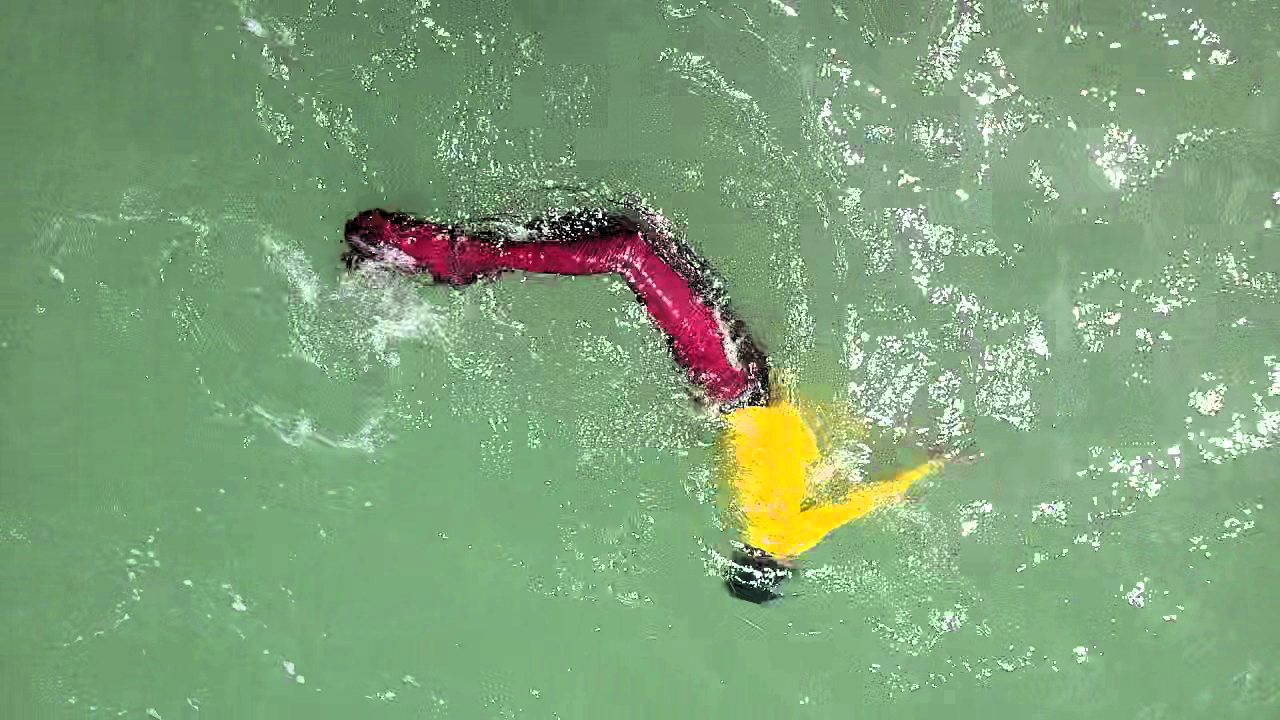
AquaQi turns whole-body movement into interaction with a soft fabric fin surface that begins near the hips, continues between the legs and extends beyond the feet.
Instead of waiting for propulsion to reach a rigid blade at the feet, HydroFlow allows movement from the upper body, core, hips and legs to progressively engage the fabric as the wave travels through the swimmer.
For swimmers, that fabric does more than create resistance. It also creates something valuable for training: a continuous physical connection to pressure, timing and flow.
Body. Fabric. Water. Feedback.
The HydroFlow Principle
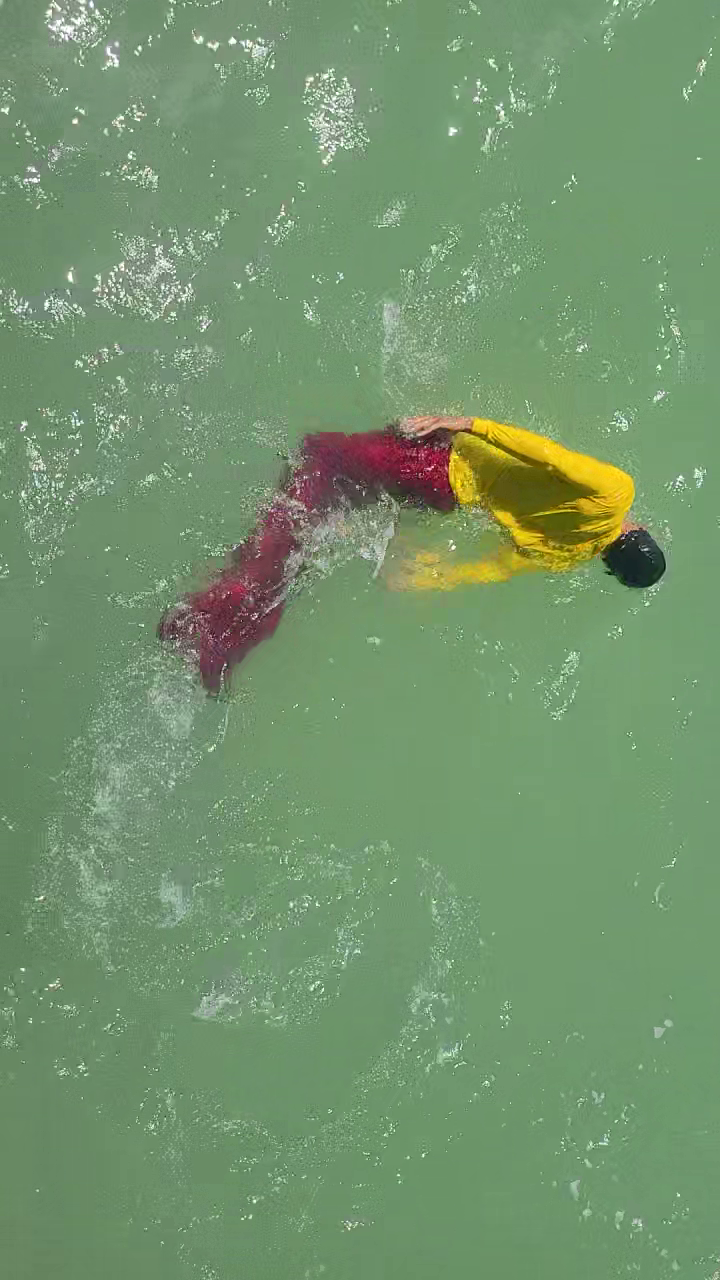
Move the body. Tension the fabric. Redirect the water.
AquaQi works through the relationship between body, fabric and water.
The swimmer creates the movement. The fabric responds to it. The surrounding water loads that fabric and gives the swimmer something they can both work against and feel.
That two-way relationship — movement going into the fabric and physical information coming back through it — is central to HydroFlow.
For Performance Swimmers
Training becomes something you can feel while it is happening.
Swimmers spend years refining details that are difficult to see from inside their own movement.
When should the kick arrive? When should the body extend? When is the wave carrying useful tension, and when has that tension already disappeared?
A coach can observe those details from the pool deck. AquaQi adds another perspective: physical feedback from the water while the swimmer is still moving.
Pressure, tension and release travel through the fabric along the legs, giving the swimmer a live sensory reference for rhythm, alignment, body-wave timing and kick control.
HydroFlow Feedback
Feel the timing, not just the movement.
AquaQi does not mechanically correct technique.
Instead, different movements create different pressure, tension, folding and resistance through the fabric.
As the fabric loads, tightens, softens and releases, those changes can be felt directly along the legs.
The swimmer can begin using those sensations as another physical reference for alignment, wave timing, leg spacing, amplitude, extension and rhythm.
The fabric does not tell you what to do. It helps you feel what the water is doing.
Read the Water
Like a sailor reads a sail.
A skipper learns to read pressure through a sail.
A changing curve, a loose edge or a change in tension reveals something about the air — without the sailor needing the sail to explain it.
AquaQi creates a similar relationship with water.
The swimmer does not need to look at the skirt. Changes in the fabric are felt through the legs.
When the surface loads smoothly, the swimmer feels it. When tension drops, changes direction or becomes uneven, that can be felt too.
With practice, those sensations can become timing references — helping the swimmer recognize when to extend, when to allow the body to descend into the wave, when to rise and when to add the next kick.
A coach can analyze the movement from outside. AquaQi lets the swimmer feel another part of that story from inside.
What a Swimmer Can Explore
The water becomes part of the feedback system.
Timing
Feel when fabric pressure builds, releases and transitions into the next phase of movement.
Alignment
Notice how changes in body position alter pressure through the fabric.
Rhythm
Explore whether the wave feels continuous or interrupted.
Kick Control
Compare how different kick amplitudes change the way the fabric loads.
Extension
Explore how a longer body line changes the sensation of flow through the system.
Leg Separation
Change how much fabric opens and how firmly the underwater sail is tensioned.
Whole-Body Propulsion
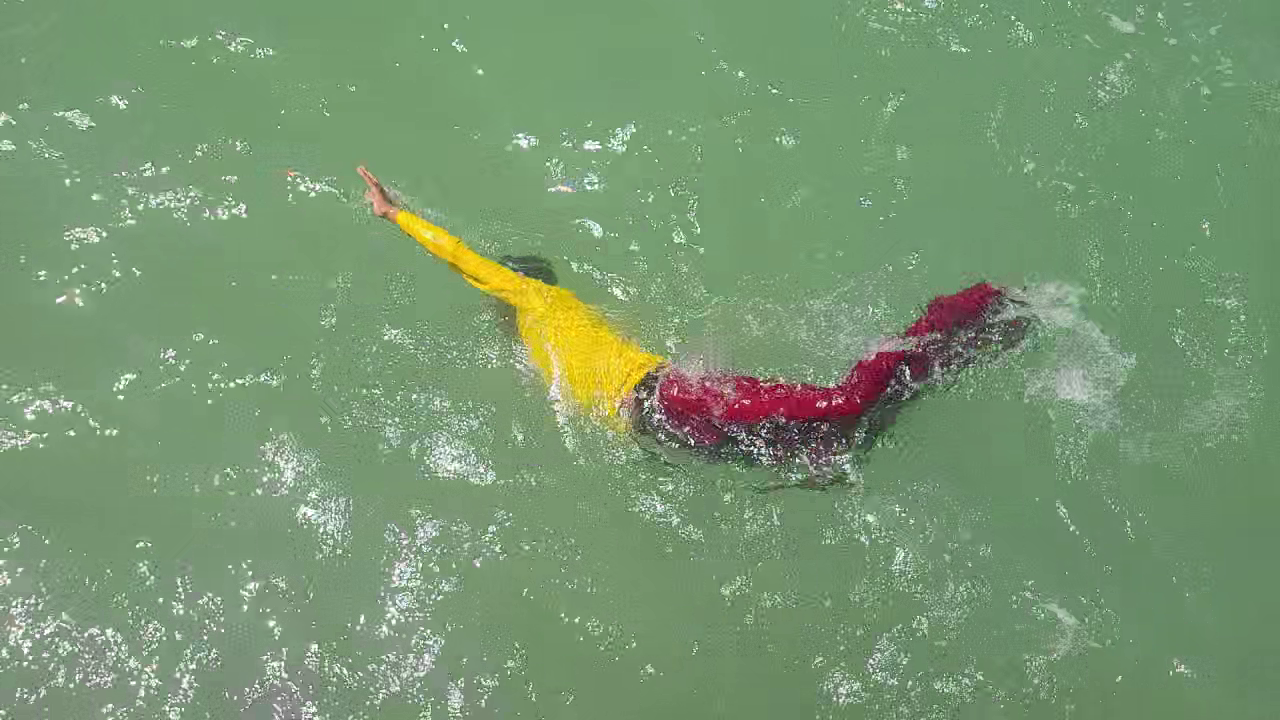
The wave can begin before the legs move.
With conventional fins, the obvious working surface sits at the feet.
AquaQi places usable fabric much higher on the body, allowing movement to begin interacting with resistance earlier in the wave.
Motion can begin through the extended hands, head, shoulders and chest, continue through the spine and core, transfer into the hips and legs, and then keep traveling through the fabric.
Hands → Head → Chest → Core → Hips → Legs → Fabric
Instead of thinking only about kicking backward with the legs, the swimmer can explore a continuous downward-and-upward wave through the entire body — closer to the connected movement found in dolphin kick and monofin swimming.
The Swing Effect
Down becomes up. Up becomes forward.
A connected body wave is not simply a kick.
When the upper body moves downward, the hips and legs begin responding through the next phase of the wave.
As that motion tensions the AquaQi fabric, the larger surface interacts with the surrounding water.
The smoother the sequence becomes, the more continuously the swimmer can transfer movement from the center of the body through the legs and into the fabric.
The Underwater Sail
A larger working surface, closer to the core.
AquaQi creates a continuous fabric surface between and around the legs.
That surface begins much closer to the hips than a conventional fin blade and can interact with the water around the thighs, knees, lower legs, feet and trailing fabric beyond the toes.
As the legs spread, more fabric opens between them and the surface becomes more tensioned — similar to tightening a sail.
Bring the legs closer together and the surface softens. This gives the swimmer another variable to explore: not only how strongly to move, but how much fabric surface to open and how firmly to load it against the water.
Responsive Fabric
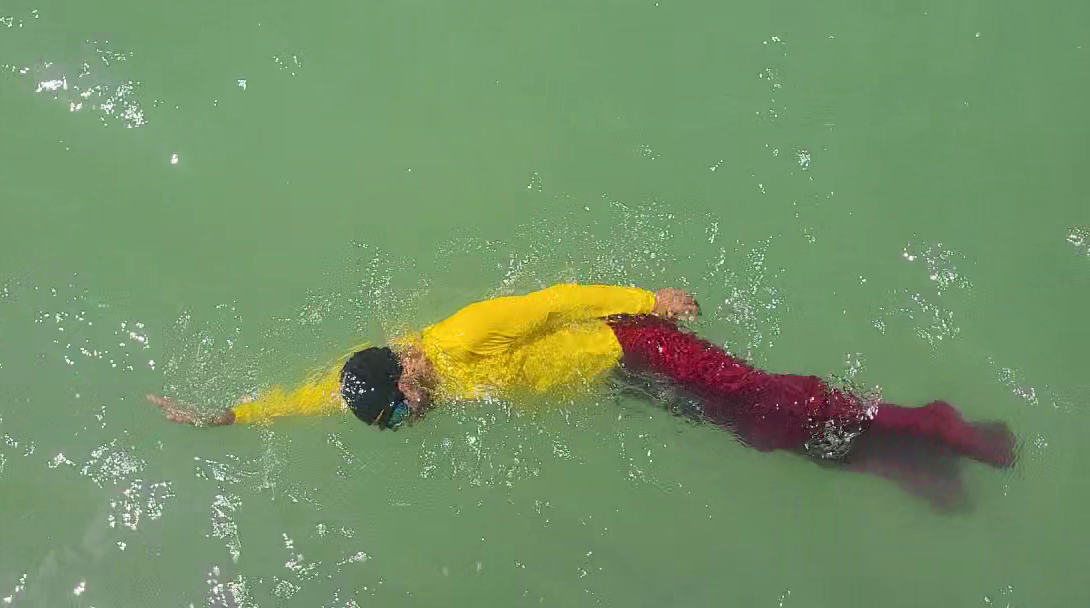
The shape changes because the swimmer changes it.
Opens
Leg separation and water pressure can create a larger working surface.
Tensions
A wider spread can tighten the fabric and create a firmer response.
Relaxes
Bringing the legs closer allows the fabric to soften and move with a gentler flow.
Feeds Back
Changes in pressure and fabric tension can make differences in movement easier to feel.
Adjustable Dynamics
Tight, soft, open or relaxed — the setup changes the feel.
AquaQi sizing intentionally overlaps, and the adjustable belt allows the same swimmer to experiment with different levels of tension.
A firmer setup can create a more immediate fabric response. A softer setup can allow a gentler, more flowing interaction with the fabric.
Swimmers who comfortably fit more than one AquaQi size may therefore experience somewhat different HydroFlow characteristics from each fit.
The HydroFlow Signature
The skirt does not simply stop at the toes.
AquaQi is intentionally longer than the swimmer’s legs.
The additional fabric extends beyond the feet and is designed to close more tightly around the trailing end of the system as water moves behind the swimmer.
A wide open lower edge would give water another route to push back into the skirt. The additional trailing fabric is intended to reduce that tendency.
The aim is a cleaner HydroFlow signature — water continuing along and away from the skirt while the soft fabric beyond the toes remains free to move with the stream.
Movement Through the Spine
The body becomes part of the fin.
AquaQi encourages the swimmer to explore a longer wave rather than isolating propulsion to the knees and feet.
The upper body can lengthen forward while the spine, core and hips coordinate the wave underneath it.
The movement then continues through the legs and into the fabric, creating a training environment for whole-body extension, coordination and fluid spinal movement.
Vertical HydroFlow
Practice the wave without crossing the pool.
HydroFlow can also be practiced vertically.
The swimmer can stay upright and concentrate on how body movement changes fabric pressure and release.
Holding a float can keep the head above water while the swimmer explores spinal movement, hip timing, rhythm and fabric tension.
Because AquaQi is soft and does not project below the feet like a long rigid fin, this kind of practice can be explored in many ordinary pool environments.
From the Surface Into the Water
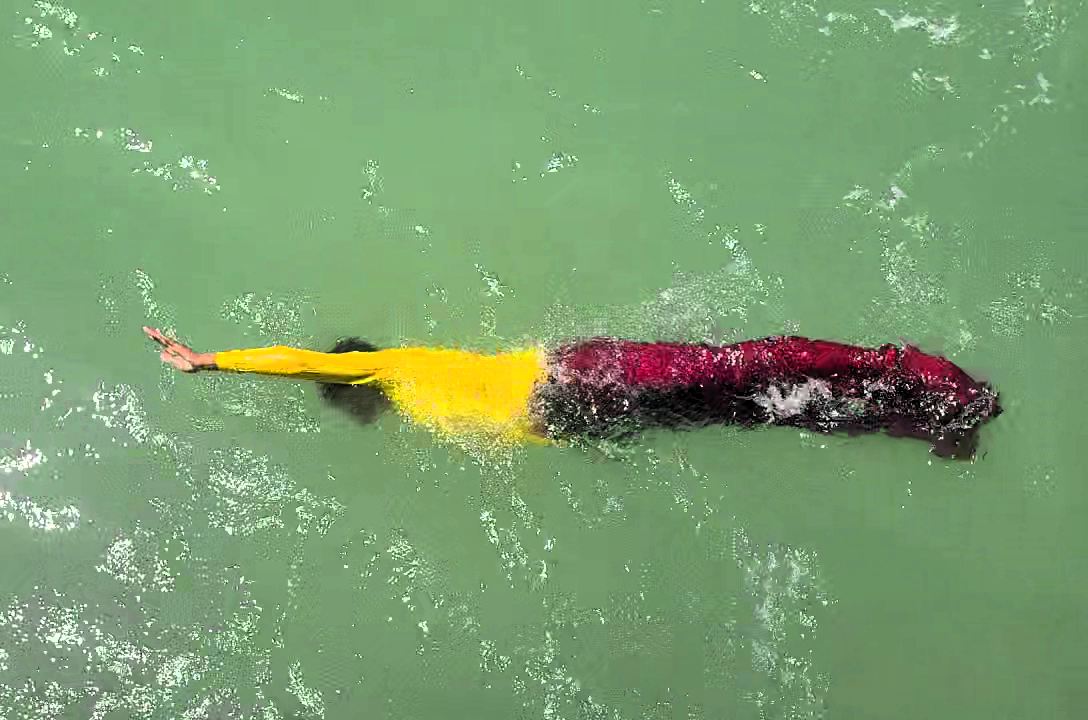
The working surface can engage before the feet are deep.
Because AquaQi’s working surface begins high on the body, the fabric around the hips and thighs can begin interacting with the water during downward body movement before the feet are deeply submerged.
This can be experienced during underwater transitions, body-wave swimming and surface dives.
For freedivers, the same principle may also be noticeable during the initial descent. But the idea is broader than diving: AquaQi does not need to wait for the feet to become the first active part of the fin.
Adjustable by Design
Fit can change with the session.
The AquaQi waist belt is deliberately highly adjustable.
It can accommodate overlapping body sizes, allow compatible users to share a system and let the swimmer choose a firmer or looser fit.
The upper-leg / seat area can also be adjusted.
These adjustments can be changed between drills or sessions as the swimmer explores different movement and tension characteristics.
Quick Release
One pull. Always within reach.
AquaQi’s main release is positioned at the waist — within the swimmer’s natural hand range.
Conventional fins and monofins attach at the feet, so removal normally requires reaching down, bringing the feet closer to the hands or changing body position.
Reach. Pull once. Open.
Finish a set. Change drills. Return to conventional swimming. Step out of AquaQi.
The quick-release design keeps removal direct and accessible, while also providing the reassurance of fast disengagement if it is ever wanted.
Small Details. Practical Water Use.
Designed for the moments around the swim, too.
Positive Buoyancy
A built-in buoyant element helps AquaQi remain positively buoyant, making a released skirt easier to recover at the surface.
Reflective Details
Reflective pull tabs mark important adjustment and release areas and can make AquaQi easier to identify in low light.
Internal Orientation Marker
A bright internal marker helps identify the inside and opening orientation when putting AquaQi on in the water or in limited visibility.
Soft Sport Fabric
Lightweight sport fabric remains soft against the body while providing a responsive surface when loaded by aquatic movement.
More Than a Long Skirt
The geometry is what creates HydroFlow.
Simply swimming in an ordinary long skirt would not create the same system.
AquaQi is shaped and fitted so the fabric can become an organized working surface between the legs while remaining controlled around the waist, hips and trailing end.
The adjustable upper fit, controlled fabric width, responsive sail area and extended trailing section work together to create HydroFlow.
One System. Different Water.
Swimming comes first. The same dynamics can travel further.
Primary Training Use
Swimming
Explore body wave, timing, alignment, kick control, extension, rhythm and core-to-leg coordination.
Freediving
Explore soft fabric finning, continuous body movement and a working surface that begins higher on the body.
Vertical Practice
Study wave mechanics and fabric response while remaining nearly in place.
Flow & Aquatic Movement
Explore rotation, rhythm, balance and aquatic movement beyond conventional strokes.
And Then It Clicks
Eventually, you stop thinking about AquaQi.
At first, you notice the fabric.
You notice the resistance. You notice when it becomes tight, when it softens and when the pressure changes.
You think about your hips, your kick and your timing.
Then, little by little, you begin paying less attention to AquaQi itself and more attention to the water.
You begin to recognize when pressure is building. When to extend. When to let the body enter the next phase of the wave. When to kick. When to release.
When the sequence becomes smoother, the fabric becomes quieter and the movement begins to connect.
You start noticing the water passing over the hands, along the head, across the face and down the body.
Like the moment a bicycle finally balances and the rider stops thinking about the pedals, the mechanics begin to move into the background.
HydroFlow
The water stops feeling like something you only push against.
It begins to feel like something you can read.
And eventually, something you can move with.
That is HydroFlow.
Experience AquaQi
The next step is to feel it in the water.
Choose your AquaQi, find your fit and begin exploring how the fabric responds to your movement.
Explore Further